

For any professional roasting operation, the equipment is the heart of the business. Whether you are running a boutique shop or a high-volume industrial facility, adhering to a strict commercial roaster schedule is the only way to protect your investment. Without consistent coffee roaster maintenance, small issues like chaff accumulation or oil buildup can quickly escalate into fire hazards, inconsistent flavor profiles, and costly mechanical downtime.
To maximize the ROI and longevity of your machinery, here is the essential maintenance framework utilized by the world’s most efficient roasting plants.
Daily and Weekly Tasks: Ensuring Flavor Purity
The foundation of a successful commercial roaster schedule begins with daily habits. Neglecting these tasks leads to a buildup of rancid coffee oils and carbon, which directly taints your consistent roasting flavor.
Chaff Collection (Every 2-5 Batches): Empty the cyclone dust collector frequently. Accumulated chaff is highly flammable and is the leading cause of roaster fires.
Cooling Tray and Airflow Paths: Vacuum the cooling tray holes and the transition pipes daily. Blocked airflow disrupts your roasting curve logging, making it impossible to replicate profiles accurately.
The Inspection Window: Clean the sight glass daily so your roasting team can visually confirm the physical development of the beans alongside the digital data.
Monthly Deep Cleaning: Optimizing Industrial Efficiency
Monthly commercial coffee roaster maintenance focuses on the internal components that sustain the machine’s thermal and mechanical performance.
Exhaust Fan and Ductwork: Disassemble and clean the exhaust fan blades. Even a thin layer of creosote can reduce airflow efficiency by 10–15%, causing the drum to overheat and the beans to develop “smoky” off-flavors.
Impeller and Pipes: Thoroughly scrape out built-up oils in the main exhaust pipes. This ensures that the convection heat remains stable, a critical factor for large-scale 30kg coffee roaster operations.
Motor and Drive Check: Inspect the tension of the drive belts and the lubrication of the main drum bearings to prevent friction-related heat spikes.
Annual Overhaul: Protecting the Mechanical Lifespan
To ensure 24/7 reliability, an annual technical audit is mandatory. This stage of the commercial roaster schedule involves professional-grade precision checks:
Thermocouple Calibration: Over time, PT100 sensors can drift. We recalibrate these probes to ensure your coffee roaster smart control receives 100% accurate data.
Burner and Gas Line Service: Clean the burner ports to ensure a clean blue flame. This reduces gas consumption and prevents carbon monoxide buildup in the workspace.
Metallurgy Inspection: For our ISO9001 certified machines, we inspect the double-walled drum for any signs of heat stress, ensuring the structural integrity remains intact for another year of heavy use.
Data-Driven Maintenance via Smart WiFi Control
In 2026, coffee roaster maintenance has moved from manual tracking to digital automation. Our advanced coffee roaster smart control systems now feature WiFi connectivity that tracks every second of operation.
By syncing your machine to your PC, the software monitors total batch counts and motor run-times. This remote profile management capability ensures that your maintenance is always proactive, never reactive, keeping your facility running at peak efficiency without wasted labor.
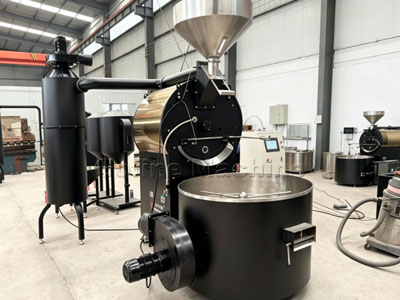
Streamline Your Maintenance Today
Is your roasting equipment prepared for peak production? We provide a comprehensive coffee roaster maintenance manual and specialized toolkits for every 1–120kg/H project we deliver.
📩 Contact us today for a professional maintenance consultation or to upgrade to a smart-controlled roasting system!
Online message